Pasta Academy
Guide to dough handling for extruded pasta with Philips Pasta Maker
Preparing dough for extruded pasta is very different from making pasta by hand or with a manual machine. Knowing what the dough should look like, how long to let it rest and how to fix problems is the secret to excellent pasta, shape after shape.
This guide explains the ideal consistency, resting times, solutions for extrusion and machine restart problems, and how to choose between egg dough and semolina-and-water dough.
The right consistency
What perfect dough for extruded pasta looks like
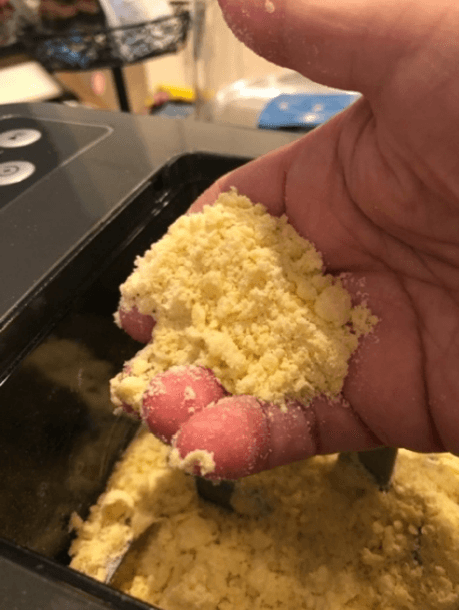
Dough for extrusion should be granular: this is the ideal texture for good results with pasta dies. Don't expect a smooth, compact ball like dough rolled out by hand.
The handful test
The dough should resemble coarse sand. Take a handful and squeeze it: it should hold together. Then rub it between your fingers: it should crumble again.
Mix, stop and restart
Once mixing is complete, stop and switch the machine off just before extrusion, depending on the model. After a moment, switch it back on and mix again. With the correct hydration, we recommend mixing twice before extrusion.
Resting makes a difference
Letting the dough rest for 30–40 minutes helps the flour absorb the liquid. Avoid adding more liquid before the final mixing stage: dough that seems dry often improves with resting alone. But the reverse also applies: if the dough is already well hydrated and rests too long, it can become too soft and hard to extrude.
To calculate the exact amount of liquid, see our dough hydration guide.
When something goes wrong
Having trouble with extrusion? Here's what to do
If the pasta struggles to come out, incorrect hydration is the most common cause. Before worrying, follow this straightforward procedure to get things working again.
Remove the die
Take the die off the machine to access the dough that has built up.
Break up the accumulated dough
Use your hands to crumble the block of dough that has formed.
Put the dough back into the machine
Return the crumbled dough to the mixing chamber.
Clean the die and restart
Clean the die and start the process again from the beginning. For ongoing care, read our guide to cleaning Pastidea dies.
Troubleshooting
Restart problems with the Philips Pasta Maker
If the machine does not restart after being switched off, don't worry: usually all you need to do is follow this sequence.
Reset the machine completely
Return the machine to its initial state.
Choose the dough type
Select either egg dough or water-based dough.
Press and hold the “Play” button
Keep it pressed for a few seconds, up to about a minute.
Release and wait a few seconds
Let go of the button and wait a moment.
Wait a little longer
The machine should restart. If it doesn't, repeat the procedure once more.
The dough “spiral”
During extrusion, the machine periodically reverses direction, producing a spiral of dough. Break it into pieces with your fingers, put it back in the machine and extrude again.
Extrusion-only mode
For a longer extrusion cycle, switch the machine off, reset it and press only the “Extrude” button. Repeat as often as needed until all the dough has been extruded.
Practical tips
Working with long pasta
Spaghetti, linguine and all long pasta shapes emerge from the machine as one continuous strand. With a few simple tricks, cutting becomes easy and the pasta stays neat and intact.
Guide the pasta with one hand
Support the pasta with one hand as it comes out and use the other to cut it to the desired length.
Prepare your work surface
Place a work surface directly below the machine, so the pasta always lands on a clean surface.
Use the right tools
For cutting, you can use a manual pasta cutter or, if compatible, the cutting blade supplied with your machine.
Choose your dough
Egg dough or semolina and water? How to choose
The type of dough depends on the pasta you want to make. Here's when to choose one or the other.
When to use eggs in the dough
Egg dough is recommended for pasta that needs to be rolled into thin sheets. Eggs add structure and richness, making the dough more elastic and less soft.
Ideal for:
Most pasta for broth is also made with egg dough, with exceptions such as riso and risone.
When to use semolina and water
Semolina and water are especially suitable for extruded pasta. You can use lukewarm water at about 36–40°C, but we recommend room-temperature water. Adding eggs to these shapes can change their flavour and make the pasta rubbery. To choose the right flour, read our guide to flours for the Philips Pasta Maker.
Ideal for:
Frequently asked questions
FAQ about extruded pasta dough
What should dough for extruded pasta look like?
It should be granular, like coarse sand. A handful squeezed in your fist should hold together, then crumble again when rubbed between your fingers.
How long should the dough rest before extrusion?
Around 20–30 minutes helps the flour absorb moisture. Dough that seems dry often improves just by resting, but dough that is already well hydrated can become too soft if left too long.
What should I do if extrusion is difficult?
Incorrect hydration is the most common cause. Remove the die, break up the accumulated dough, return it to the machine, clean the die and start again.
What if my Philips machine does not restart after being switched off?
Reset the machine, select the dough type, hold “Play” for a few seconds up to about one minute, then release and wait. If it still does not restart, repeat once more.
When is it best to use eggs in the dough?
For pasta rolled into thin sheets, such as fettuccine, lasagne, pappardelle, cannelloni, tortellini, ravioli and tagliolini. Eggs make the dough more elastic and less soft.
Which pasta shapes are best made with semolina and water?
Extruded shapes such as spaghetti, linguine, orecchiette, penne, paccheri, gnocchetti sardi, rigatoni, casarecce, cavatelli, trofie and pici. Eggs may change their flavour and make them rubbery.
Explore further
Dies, guides and tips for your Philips Pasta Maker
Once you've mastered the dough, choosing the right die makes all the difference. Discover how materials affect the results in our Bronze vs POM: which pasta die is right for you? guide and browse the dies for the Philips Pasta Maker Avance, as well as those for the 7000 Series.
Article written with the contribution of Elise Avella Feiner.