Pasta Academy
How to store extruded pasta
Drying, freezing and refrigeration
If you make pasta in large batches, whether to give it as a gift or to keep it ready for later, there are several ways to store it depending on the type of dough. This guide offers practical advice to help you choose the right method without spoiling your hard work.
From drying pasta on racks to freezing it in Ziplock bags, and from refrigerator to freezer storage times: everything you need to keep your fresh pasta in good condition and safe to eat.
Before you begin
There is no single way to store pasta
Making pasta at home takes time and care, so it would be a shame to waste your efforts through improper storage. Whether you want to stock up, give it as a gift or simply prepare it ahead of time, the best method depends mainly on the type of dough: egg-free and egg pasta behave differently, as do delicate shapes, long pasta and filled pasta.
Storage conditions also matter: humidity and temperature can make drying take longer. Good dough begins with the right hydration. To learn more, read our dough hydration guide and our guide to handling dough for extruded pasta.
Here are some practical tips: the following sections cover drying, freezing and refrigerator storage, with recommended times and useful tips for each method.
Method 1
Drying extruded pasta
Once your pasta is ready, especially if you have made a large batch, you can leave it to dry. Just follow a few simple steps to do it properly:
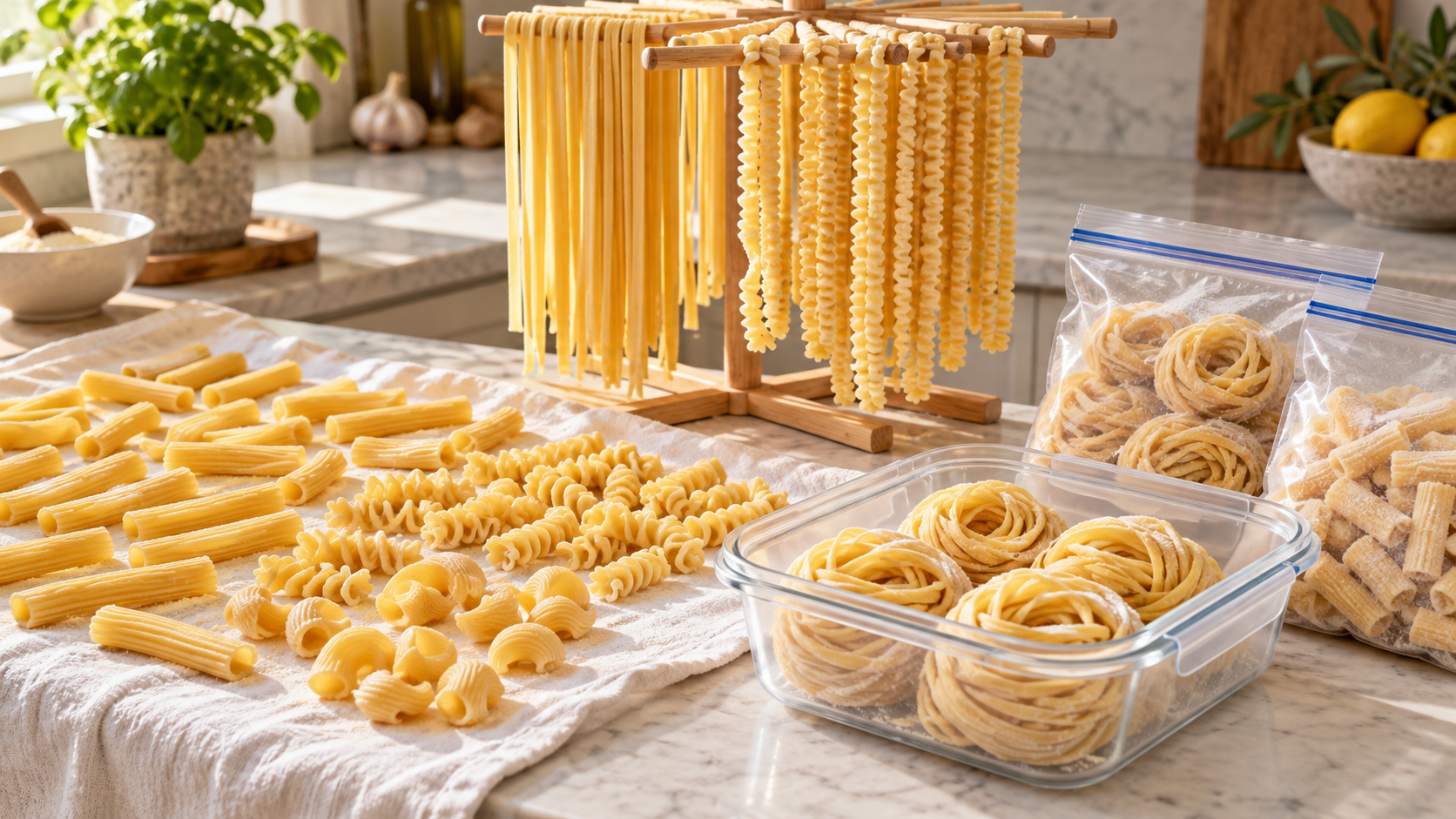
On a clean white cloth
Spread the pasta in a single layer on a clean white cloth in a dry, well-ventilated place.
On pasta drying racks or drying boards
The Pastidea pasta drying rack or drying boards keep the pasta well spaced and promote even drying.
Even if the pasta feels dry after just a few hours, safe, longer-term storage often requires 3–5 days of thorough drying, particularly in humid conditions or low temperatures.
Egg-free or egg pasta: storage times differ
Ideal for drying
Pasta made without eggs is particularly suitable for this storage method, in bags or airtight containers at room temperature.
Freezing is best after two weeks
Egg pasta can be left to dry for a few days, but for storage longer than two weeks, freezing is preferable to preserve its safety and quality.
Method 2
Freezing extruded pasta
Freezing is an excellent way to store pasta, especially egg pasta or more delicate shapes. Here is how to do it, step by step.
Let it dry
Leave the pasta to dry at room temperature for about an hour.
Arrange on trays
Arrange the pasta on wide, shallow trays and place them in the freezer.
Transfer to containers
Once frozen (after a few hours), transfer the pasta to Ziplock bags or lidded food containers. These containers are practical, reusable and dishwasher-safe.
Protect the bags
For delicate shapes, place the Ziplock bags inside rigid containers to protect the pasta from bumps or crushing.
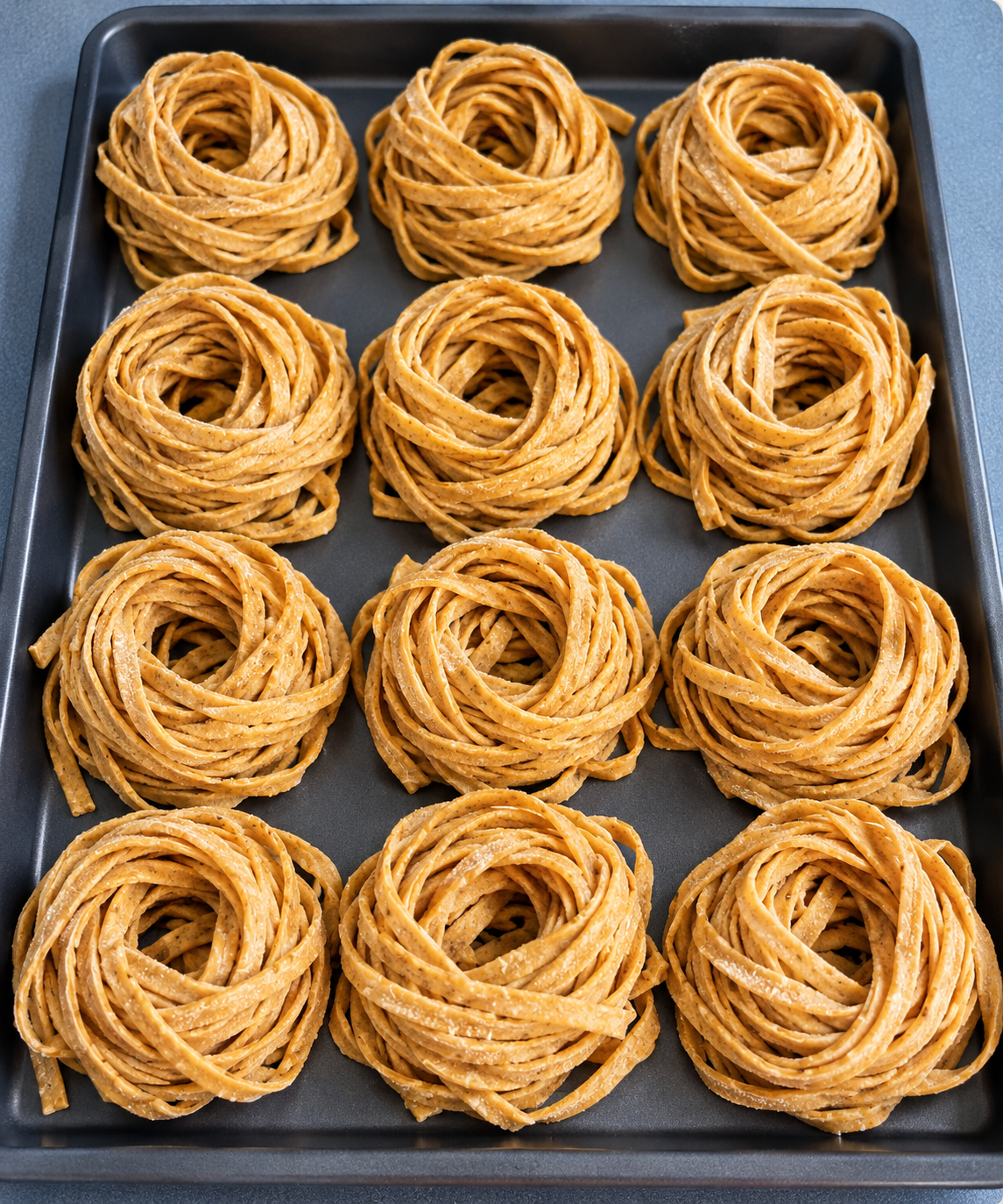
Warning: do not stack heavy items on top of the pasta in the freezer, as it may break.
Method 3
Refrigerator and freezer storage: how long does pasta last?
Make small nests
For long pasta, we recommend shaping small nests, dusting them lightly with flour and storing them in the same way. When it is time to cook them, see our guide to cooking fresh pasta for times and useful tips.
If you do not want to dry the pasta, the refrigerator and freezer are the easiest alternatives. Here is how long it keeps and how to handle filled pasta.
Fresh pasta keeps in the refrigerator for approximately 5–7 days.
Pasta keeps well in the freezer for about a month, although it often lasts longer without problems.
Filled pasta (such as ravioli or tortellini) should be frozen in a single layer on a tray; once firm, transfer it to bags or containers.
Do you enjoy making ravioli and tortellini at home? Discover our ravioli, tortellini and biscuit moulds and, if you are choosing the right machine, compare our home and professional pasta machines.
Frequently asked questions
FAQ: storing extruded pasta
How long should pasta dry before storage?
Even if it seems dry after a few hours, safe, longer-term storage often requires 3–5 days of thorough drying, especially in humid conditions or at low temperatures.
Can egg pasta also be dried?
Yes, but only for a few days. For storage longer than two weeks, freezing is preferable to maintain safety and quality.
How should pasta made without eggs be stored?
It is very well suited to drying. Once dry, store it in bags or airtight containers at room temperature.
How do you freeze extruded pasta?
Leave it to dry at room temperature for one hour, arrange it on wide, shallow trays in the freezer and, once frozen, transfer it to Ziplock bags or lidded containers.
How long does fresh pasta last in the fridge and freezer?
Approximately 5–7 days in the refrigerator and about one month in the freezer, although it often keeps longer.
How should ravioli and tortellini be stored?
Freeze them in a single layer on a tray and, once firm, transfer them to bags or containers.
Pasta Academy
From preparing the dough to serving your pasta
Good storage starts with well-made dough and properly maintained equipment. At the Pasta Academy you will find guides, recipes and tips for making pasta at home or professionally. For inspiration, explore our unusual and original pasta shapes too.