Home › Recipes › Basic fresh pasta with the Philips Pasta Maker
Recipe · Philips Pasta Maker
Fresh pasta with the Philips Pasta Maker: the basic semolina recipe
Two ingredients, one machine and about 15 minutes of hands-on time. This is the foundation recipe for every pasta you will extrude at home: simple semolina and cold water, explained step by step so you get firm, golden and perfectly shaped pasta from your Philips Pasta Maker, whichever die you choose.
What you need
Ingredients for fresh pasta with the Philips Pasta Maker
The base dough has only two ingredients, so the quality of each one matters. Use durum wheat semolina and cold water, weigh both on a kitchen scale and you will get consistent results every single time.
Dough ingredients
- 250 g semolina durum wheat semolina (semola di grano duro)
- 95 g cold water 38% hydration
Egg alternative
Replace the water with 1 egg plus enough cold water to reach 100 g in total (about 40% hydration). The egg gives a slightly richer flavour, a deeper yellow colour and a more tender bite.
* Always weigh the water. Measuring by weight, not by volume, is the single most important habit in extruded pasta.
Equipment
- Philips Pasta Maker Avance, 7000, 5000 or Viva series
- Avance die fitted to the machine for this recipe
- Kitchen scale precise to the gram
- Large pot for salted boiling water
- Drying rack or floured tray to rest the extruded pasta
Looking for more shapes? Browse the pasta dies for Philips Pasta Maker 7000 and Avance or the dies for Philips 5000 and Viva.
Step by step
How to make fresh pasta with the Philips Pasta Maker
Follow these seven steps in order. The whole process takes around 15 minutes of active work, plus 30 minutes of resting time while the dough relaxes.
-
1
Set up the machine
Make sure the Philips Pasta Maker is clean, dry and correctly assembled, then attach the Avance die. Check that the die is locked firmly in place before you add any ingredients: a loose die is the most common cause of uneven extrusion.
-
2
Add the semolina and the cold water
Pour the 250 g of semolina into the mixing chamber and start the machine. While it runs, add the cold water (or the egg and water mixture) gradually, not all at once. Slow addition lets the semolina absorb the liquid evenly and forms small, uniform crumbs instead of wet lumps.
-
3
Knead for 6 minutes
Let the machine knead the mixture for 6 minutes. At this stage the dough should look like moist, sandy crumbs that hold together when pinched, not a smooth ball like bread dough. This is exactly what you want for extruded pasta.
-
4
Rest the dough for about 30 minutes
Leave the dough in the machine, covered, for approximately 30 minutes. Resting gives the semolina time to hydrate fully and the gluten time to relax, which results in smoother pasta, cleaner edges and fewer tears at the die.
-
5
Extrude your pasta
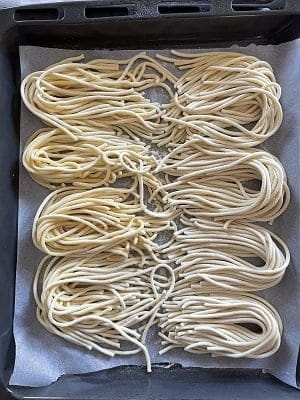
Start the machine again and extrude the dough through the die. Cut the pasta to the length you like and, if you are not cooking straight away, spread it on a floured tray or hang it on a drying rack so the strands do not stick together.
-
6
Boil for 5–7 minutes
Bring a large pot of water to a rolling boil, add salt, then cook the pasta for 5 to 7 minutes depending on the shape and thickness. Start tasting at minute 5: the pasta should be tender but still have a pleasant bite (al dente).
-
7
Drain, season and serve
Drain the pasta, keeping a small cup of the starchy cooking water, and toss it with your sauce of choice. A splash of cooking water helps the sauce cling to the surface. Serve immediately while it is hot.
Expert advice
Tips for perfect pasta every time
A few small details make the difference between good and great extruded pasta. These are the habits we recommend to every Philips Pasta Maker owner.
Why cold water?
Kneading and extruding generate friction, which warms the dough. Starting with cold water helps keep the temperature under control, so the dough stays workable and the pasta comes out smooth rather than sticky.
Look for crumbs, not a ball
Extruded pasta dough is drier than hand-rolled dough. After kneading, it should resemble damp sand that clumps when squeezed. If it looks like a smooth, shiny ball, it is probably too wet.
Quick troubleshooting
Seasoning suggestion
Matriciana sauce for your fresh pasta
Fresh semolina pasta has a firm texture and a slightly rough surface, which makes it perfect for rich, savoury sauces. A classic Matriciana (amatriciana-style) sauce is a natural match: crispy guanciale, sweet tomato and sharp pecorino cheese.
Ingredients
-
Tomato sauce (about 400 g for 250 g of pasta dough)
-
Guanciale, cut into strips (about 100 g)
-
Pecorino cheese, finely grated (about 40 g, plus extra to serve)
-
Freshly ground black pepper
Method
-
Fry the guanciale strips in a wide pan, without adding oil, until golden and crispy. Remove them and set aside.
-
Use the rendered fat to cook the tomato sauce. Simmer gently for about an hour for a deep, rounded flavour (a shorter simmer of 25–30 minutes also works when you are in a hurry).
-
Stir in the guanciale and the pecorino until the cheese melts into the sauce.
-
Toss the freshly cooked pasta in the pan with a splash of cooking water, then finish with more pecorino and plenty of black pepper.
Questions & answers
Frequently asked questions
The questions we hear most often from people making fresh pasta with a Philips Pasta Maker.
What is the best flour for the Philips Pasta Maker?
Durum wheat semolina is the classic choice for extruded pasta. It gives a firm, golden pasta that holds its shape and cooks al dente. You can experiment with other flours, but remember that each one absorbs water differently, so the amount of liquid will need to be adjusted.
How much water do I need for 250 g of semolina?
This recipe uses 95 g of cold water for 250 g of semolina, which is 38% hydration. If you prefer to use an egg, combine 1 egg with enough water to reach 100 g in total. Always weigh the liquid for accurate and repeatable results.
Do I really need to rest the dough for 30 minutes?
Yes. Resting allows the semolina to absorb the water evenly and the gluten to relax. The result is a smoother extrusion, a better texture and pasta that is less likely to crack or break.
How long does fresh pasta take to cook?
Between 5 and 7 minutes in salted boiling water, depending on the shape and thickness. Thinner shapes such as spaghetti cook faster, while thicker ones need a little longer. Taste the pasta from minute 5 onwards.
Can I use different dies with the same recipe?
The base recipe is a great starting point for every die. However, different pasta shapes may require slightly different hydration levels. Start with this recipe, then fine-tune the water in small amounts. Explore the full range of Pastidea dies for Philips Pasta Maker.
Does this recipe work with other pasta machines?
The principle of a firm, crumbly semolina dough is the same for most home extruders, but quantities and hydration can vary between models. Pastidea also makes dies for Kenwood, KitchenAid and many other machines.
Can I make the pasta in advance?
Yes. You can keep it in the fridge in an airtight container for a day or two, or freeze it in loose nests and cook it straight from frozen. See the storage tips in the section above.
Show us your pasta
Try the recipe and share your results
Made your own fresh pasta with the Philips Pasta Maker? We would love to see it. Share a photo on Instagram or Facebook, or join the conversation in our Facebook community.
Remember that different pasta shapes may require varying hydration levels. If you have any question about your dough, your machine or your dies, our customer service is happy to help.
Pasta Academy
Keep learning
Guides, dough recipes, troubleshooting tips and technique videos for home pasta makers and professional pasta chefs.